5 to 24 mPa·s
Paint grades HD-5, HD-10, HD-20
Low viscosity for corrosion protection and floor coatings, primer to topcoat. HD-5 at 5 to 8 mPa·s dissolves up to 60% and lets you raise solids to meet VOC limits under 420 g/L.

Performance Additives · Chlorinated Rubber
Chemtechcov chlorinated rubber in nine grades for anti corrosion paint, road marking, pool coatings and contact adhesives, all at 65% minimum chlorine and free of carbon tetrachloride, sorted by viscosity in 20% xylene, which is what decides the job.
Product detail
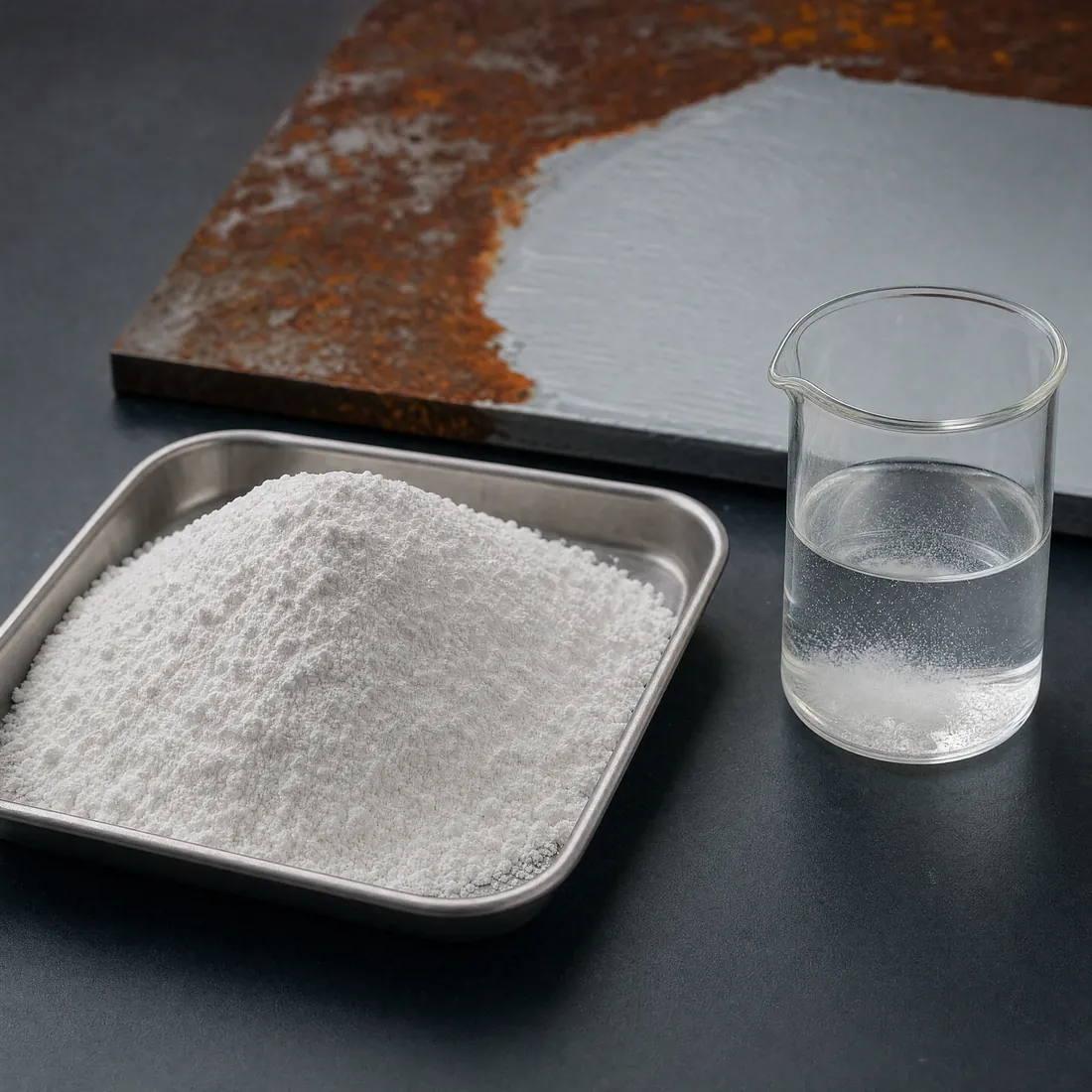
Chemtechcov (氯化橡胶) is the Hongda chlorinated rubber brand. Every grade shares 65% minimum chlorine, 0.6% maximum loss on drying and a white powder form. What changes is viscosity in 20% xylene at 25°C, and that decides paint or adhesive use.
5 to 24 mPa·s
Low viscosity for corrosion protection and floor coatings, primer to topcoat. HD-5 at 5 to 8 mPa·s dissolves up to 60% and lets you raise solids to meet VOC limits under 420 g/L.
16 to 110 mPa·s
Mid viscosity for solvent-borne contact adhesives, where chlorinated rubber raises bond strength, and for rubber-to-metal bonding. Solubility 40%.
120 to 450 mPa·s
High viscosity for adhesive systems that need body: HD-130, HD-170 and HD-400 at 350 to 450 mPa·s. Same 65% chlorine and 0.6% loss on drying as the rest of the range.
Where it goes
Before you order
A resin made by chlorinating natural or synthetic rubber until it holds about 65% chlorine. It comes as a white powder that dissolves in aromatic solvents, dries by evaporation and leaves a film that water, acid, alkali and salt struggle to get through.
Steel and iron structures near the sea, tanks, bridges, road markings, indoor and outdoor floors, swimming pools and chemical plants. It dries fast, recoats without sanding, and holds up in the wet and salty places where other binders fail.
They do not cure, they dry. The solvent evaporates and the resin closes into a film, with no chemical reaction and no pot life to watch. That is why a damaged area can be recoated with the same paint and it melts into the old film.
It resists water, salt spray, acid and alkali, which is what pool paint and marine work need. It is a barrier coating, so the film thickness and the surface preparation decide the result as much as the resin does.
No, it is solvent borne. Chlorinated rubber dissolves in aromatic solvents such as xylene. Our low viscosity grade HD-5 dissolves up to 60%, which lets a formulator raise solids and land under a 420 g/L VOC limit.
Strategic partners
Write directly to the partner team, or send the short application. It reaches Hongda's partner team by email.
info@hongda-chem.comOr call the group directly: +86 574 87907888