HD-F series · 23 grades
Micronized wax powders
FT, PE, HDPE, PP, OPE, carnauba and PTFE-modified powders, D50 3 to 6 µm, melting point 85 to 320°C. Slip, scratch and abrasion resistance, matting and thixotropy at 0.1 to 3%.

Performance Additives · Wax Additives
Chemtech micronized wax powders, wax pulps and wax emulsions for inks, coatings, plastics and leather, PE, PP, PTFE, carnauba and montan, each grade with particle size, melting point, dosage and the grade it replaces.
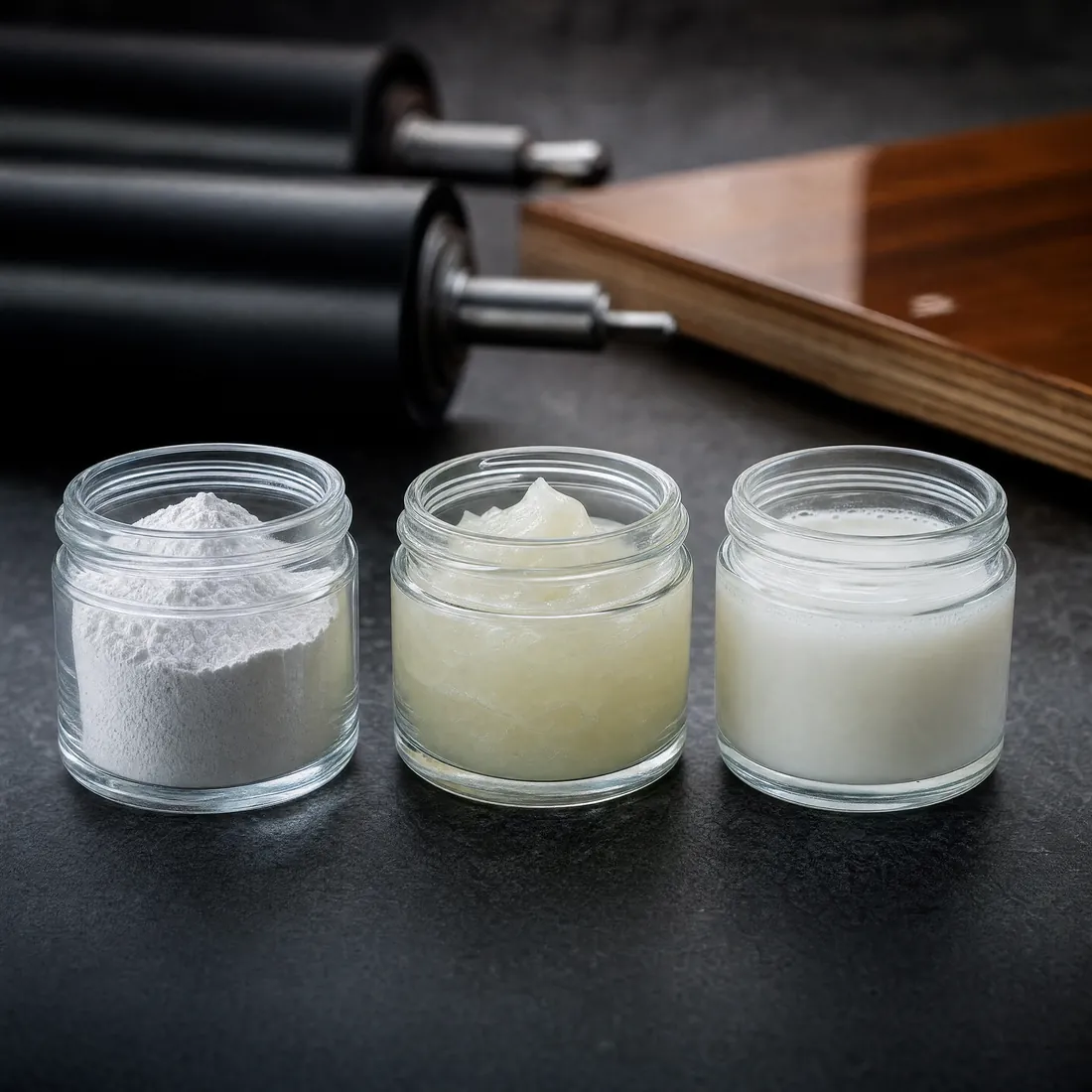
Product detail
Chemtech Waxes is the Hongda wax additive brand. The brochure lists every grade with component, appearance, particle size, melting point, dosage, the systems it fits (ink, coil coating, industrial and floor paint, wood, waterborne, UV, leather) and the counter grade it replaces.
HD-F series · 23 grades
FT, PE, HDPE, PP, OPE, carnauba and PTFE-modified powders, D50 3 to 6 µm, melting point 85 to 320°C. Slip, scratch and abrasion resistance, matting and thixotropy at 0.1 to 3%.
HD-P series · 12 grades
Pre-dispersed PE, PE/PTFE and PTFE waxes in xylene, mineral oil or butyl ester, 7 to 98% active. Hand feel, nail resistance and scratch protection for wood, UV and industrial coatings and offset ink.
HD-L series · 17 grades
Non-ionic PE, PP, paraffin, carnauba and montan dispersions, 25 to 55% solids, down to 100 nm. Scrub resistance, anti-blocking, water repellency and polish for waterborne paint, ink and leather.
Where it goes
Before you order
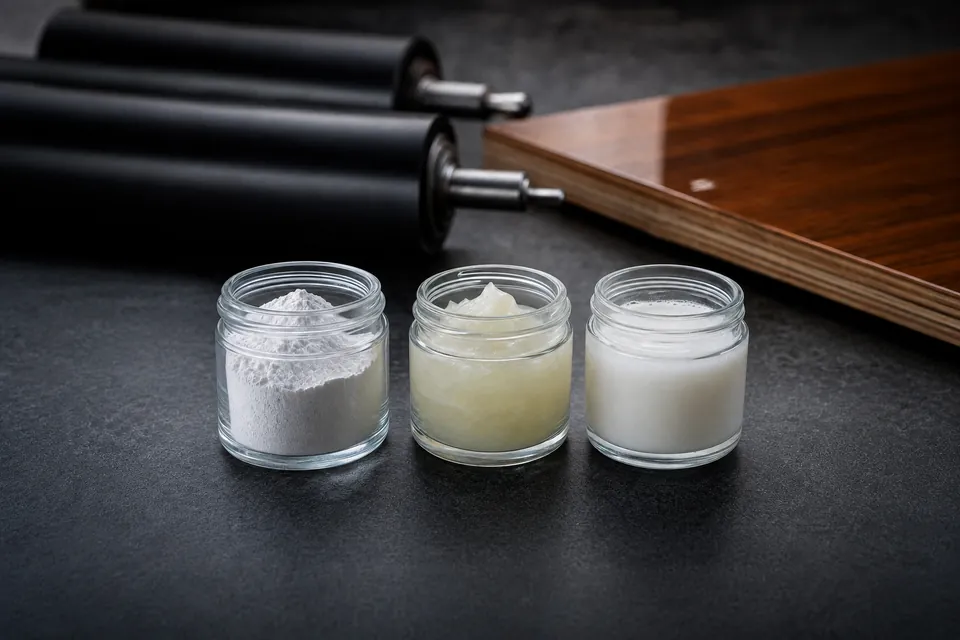
Micronized wax migrates to the surface of the dry film and sits there. That gives slip, scratch and abrasion resistance, rub resistance on printed sheets, and matting when the particle size is right. Our HD-F powders run D50 of 3 to 6 µm, melting point 85 to 320°C, dosed at 0.1 to 3%.
By origin: natural waxes such as carnauba and montan, mineral waxes such as paraffin and microcrystalline, and synthetic waxes such as PE, PP, FT and PTFE. Our range covers all three, since the ink or coating decides which one behaves.
Wax dispersed in water with an emulsifier, so it can go into a waterborne system without solvent. The HD-L series runs non ionic PE, PP, paraffin, carnauba and montan at 25 to 55% solids, with particle size down to 100 nm.
Waterborne paint, water based ink, leather and textile finishing. It brings scrub resistance, anti blocking, water repellency and polish. Fine particle grades keep the film clear, coarser ones matte it.
PTFE costs more than any other wax on the card, and too much of it can hurt recoating and intercoat adhesion. It is worth it where wear is the real problem, such as coil coating and metal decorating. For plain slip in an offset ink, a PE or FT grade does the job for less.
Strategic partners
Write directly to the partner team, or send the short application. It reaches Hongda's partner team by email.
info@hongda-chem.comOr call the group directly: +86 574 87907888