Exhaust · high fixation
Bifunctional HF
Yellow HF-4GL to Black HF-GSP, with C.I. Yellow 160A, Red 222, Blue 221 and more. Light 4 to 6-7, washing 4-5 on most shades. Starred H/C grades are heavier shades.

Textile Chemistry · Reactive Dyes
Dragonfix reactive dyes for cotton and cellulosics. Bifunctional HF, vinyl sulphone, HE for hot exhaust, P for printing and the XL new type range, each shade with its C.I. number, fastness and solubility.
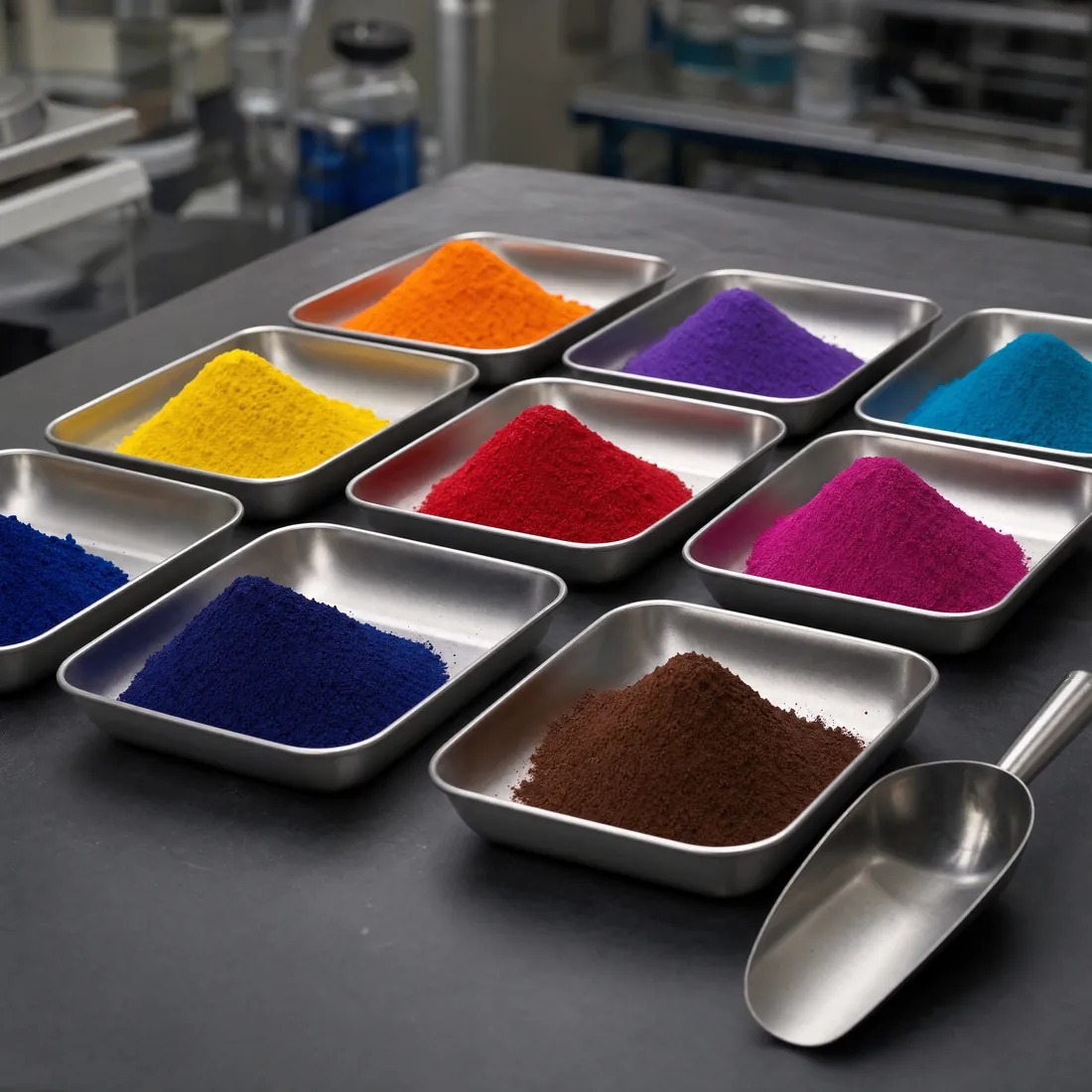
Product detail
The Dragonfix brochure lists every shade at 3% owf on cotton (blacks at 6%), with C.I. Reactive number, fastness to light (xenon), washing at 95°C and perspiration in acid and alkali, split into change of colour and staining on cotton, plus solubility in g/l at 50°C.
Exhaust · high fixation
Yellow HF-4GL to Black HF-GSP, with C.I. Yellow 160A, Red 222, Blue 221 and more. Light 4 to 6-7, washing 4-5 on most shades. Starred H/C grades are heavier shades.
Classic VS range
Yellow FG, GL, GR, Orange 3R, Red RB and 5B, Violet 5R, Blue R and BB, Turq. Blue G, Navy GG, Brown GR and Blacks B, RL, NR. Light 4 to 5-6, washing 4 to 5.
Hot exhaust · printing · XL
HE for hot exhaust dyeing, P for printing including Black PN, and the XL, HW and H/C new type grades for deep blacks and navies. Washing 4 to 4-5, solubility 100 to 200 g/l.
Where it goes
Before you order
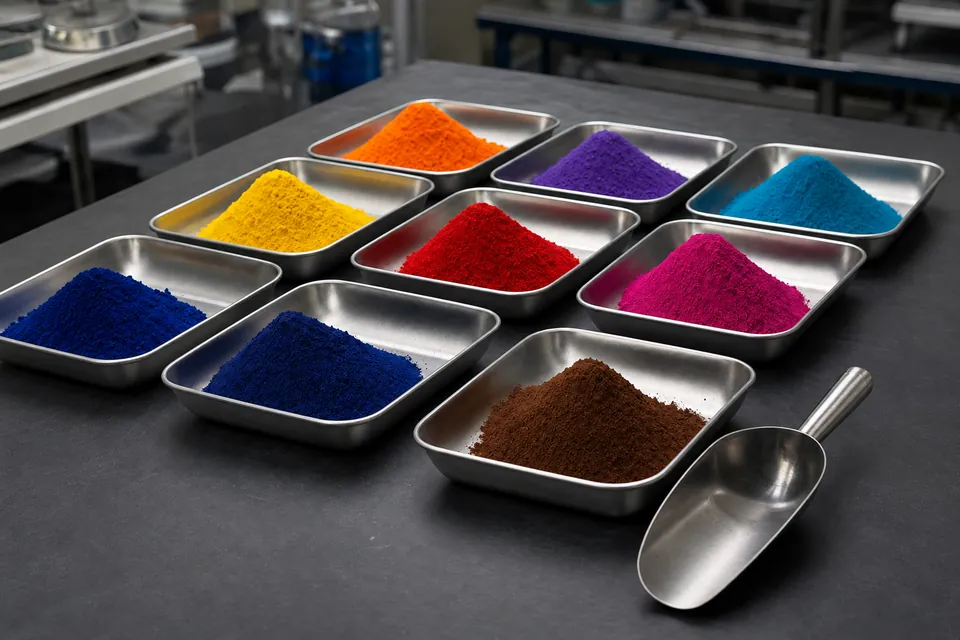
A dye that forms a covalent bond with the fiber. On cotton it reacts with the cellulose hydroxyl groups under alkali, so the color becomes part of the fiber instead of sitting on it. That bond is why reactive dyes hold their wash fastness.
Dragonfix covers five families: bifunctional HF such as Yellow HF-4GL and Black HF-GSP, the vinyl sulphone range with Yellow FG, Red RB, Turq. Blue G and Black B, the HE hot exhaust dyes, the P printing dyes including Black PN, and the XL, HW and H/C new type grades.
Part of the dye hydrolyzes in the bath and never reaches the fiber, so you pay for dye that leaves in the effluent. They need salt and soda ash, plus a long wash off. And shade reproduction depends on liquor ratio and temperature control. The fixation figures per range are in the brochure, so you can plan the recipe around them.
A pigment has no affinity for cotton. It sits on the surface held by a binder, so it fades and rubs off with wear, and that is the worn look people buy on purpose. A reactive dye bonds inside the fiber, keeps its hand and holds washing fastness 4 to 5.
Reactive dyes whose active group is a sulphatoethyl sulphone that turns into vinyl sulphone under alkali and reacts with the fiber. They dye at medium temperature, cover well and level well. The Dragonfix VS range runs from Yellow FG to Black NR, with light fastness 4 to 5-6 and washing 4 to 5.
Strategic partners
Write directly to the partner team, or send the short application. It reaches Hongda's partner team by email.
info@hongda-chem.comOr call the group directly: +86 574 87907888