P.Y.12 to P.Y.191 · P.O.5 to P.O.36
Yellows and oranges
Benzidine and Fast Yellows, Pigment Yellow HD-2R, HD-3R and HD-AGR, Fast Oranges HD-139, HD-GG and HD-HL. Heat resistance from 120°C up to 300°C on HD-AGR and HD-RP.

Pigments & Colorants · Organic Pigments
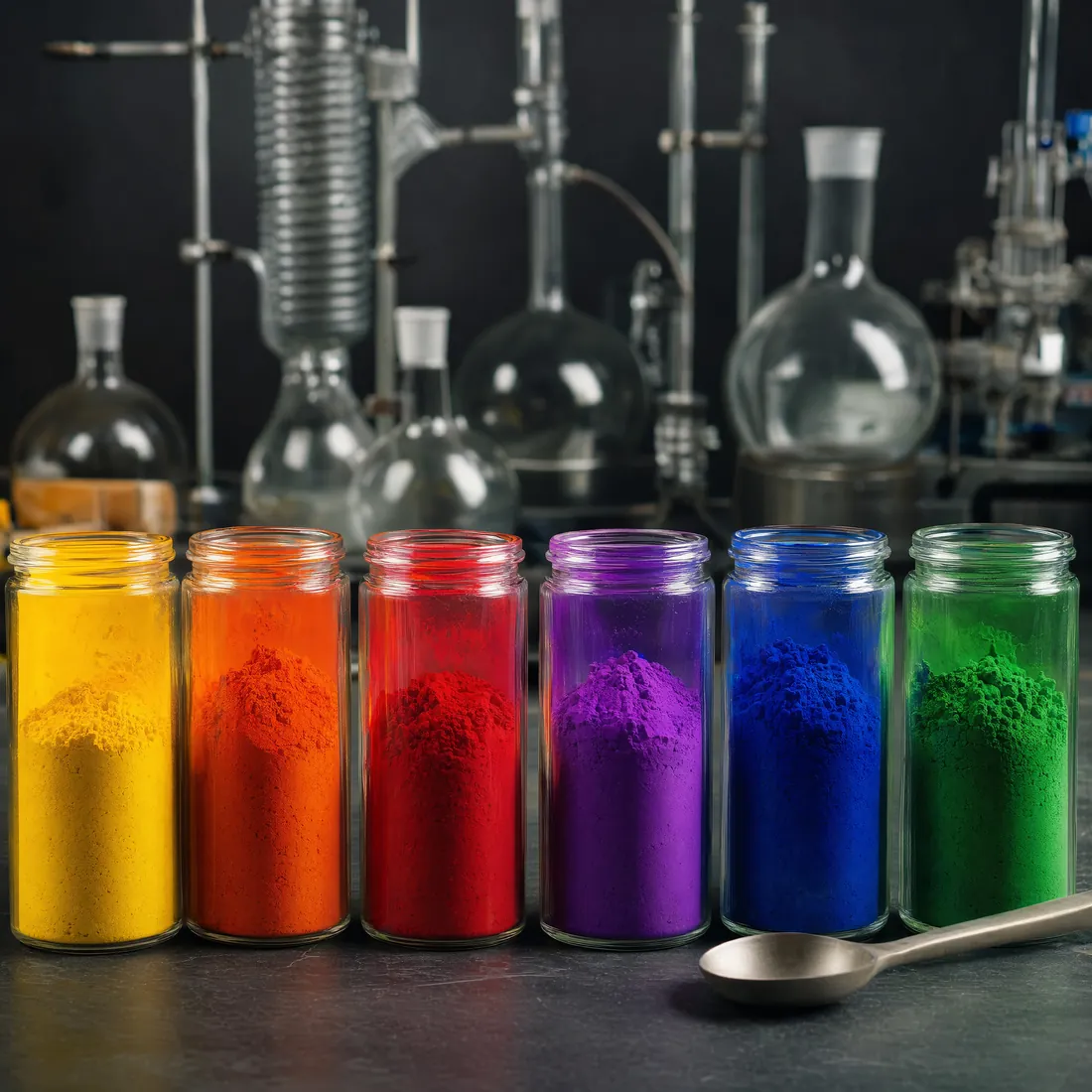
Transcor organic pigments in HD and RC grades, from Fast Yellow to Phthalocyanine Green, for offset, solvent and water based inks, paints, plastics and textile printing, each grade with its C.I. number, physical data and fastness ratings.
Product detail
The Transcor card lists full shade and tint per grade, C.I. Pigment number, pH, density, oil absorption, light and heat fastness, water, oil, acid and alkali resistance, and marks main and suggested uses across inks, paints, plastics and textile printing.
P.Y.12 to P.Y.191 · P.O.5 to P.O.36
Benzidine and Fast Yellows, Pigment Yellow HD-2R, HD-3R and HD-AGR, Fast Oranges HD-139, HD-GG and HD-HL. Heat resistance from 120°C up to 300°C on HD-AGR and HD-RP.
P.R.2 to P.R.266 · P.V.3 to P.V.23
Fast Scarlets 48:2 to 48:4, Fast Rubine 57:1, Red Lakes 53:1, Quindo Red P.R.122, Fast Reds 170 to 208, Quindo Violet P.V.19 and Fast Violet P.V.23 up to 250°C.
P.B.15:0 to 15:4 · P.G.7
Phthalocyanine Blue B, BS and BGS grades in HD and RC codes, light fastness 7 to 8, heat resistance 200°C to 260°C. Phthalocyanine Green HD-G for inks, paints and plastics.
Where it goes
Before you order
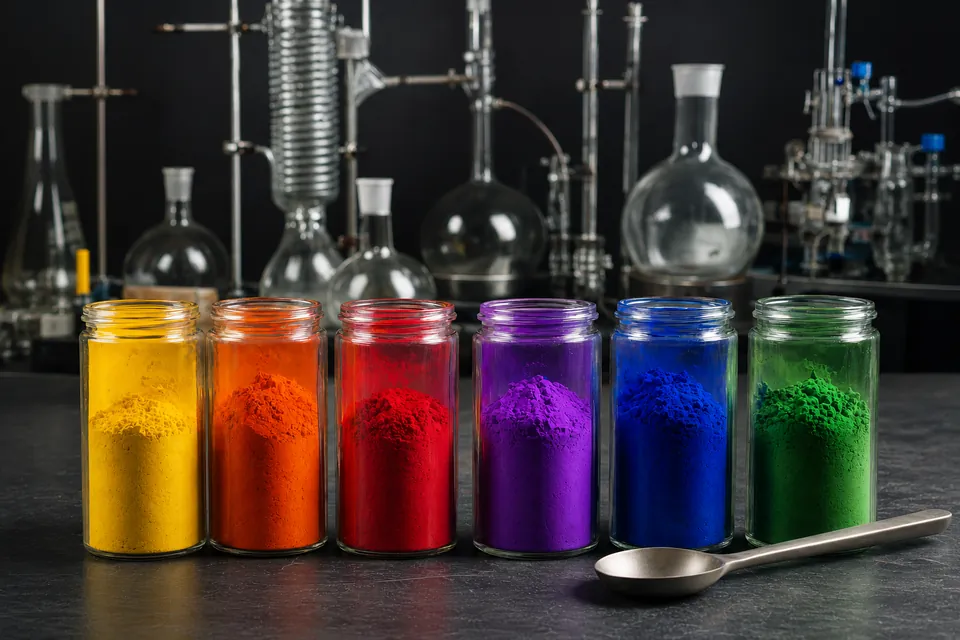
Colored particles built on a carbon skeleton that stay insoluble in the system they color. They give cleaner, stronger, brighter shades than inorganic pigments, and each one is identified by a C.I. Pigment number such as P.Y.12 or P.R.122.
Chemistry and behavior. Organic pigments are strong, bright and transparent, so they carry less loading for the same depth. Inorganic pigments, iron oxide or titanium dioxide, are opaque, cheap by weight and very stable to heat and light. Most formulations use both, one for shade and one for hiding power.
Synthetic organic molecules. The yellows and oranges are mostly azo compounds, the reds run from azo to quinacridone, and blue and green are copper phthalocyanine. Transcor lists which family each grade belongs to and the heat resistance that comes with it, from 120°C to 300°C.
The ones that move by the ton: Pigment Yellow 12 and 14 for offset inks, Pigment Red 48:2 and 57:1 for packaging, Pigment Red 122 for magenta, Pigment Blue 15:3 and Pigment Green 7. All of them are on the Transcor card with full shade, tint and fastness data.
3204.17 covers synthetic organic pigments and preparations based on them. The local suffix depends on your country. Send the pigment team your grades and destination port and they put the code and the packing on the proforma.
Strategic partners
Write directly to the partner team, or send the short application. It reaches Hongda's partner team by email.
info@hongda-chem.comOr call the group directly: +86 574 87907888