Fl. Yellow X-10GFF to Orange G
Yellows and oranges
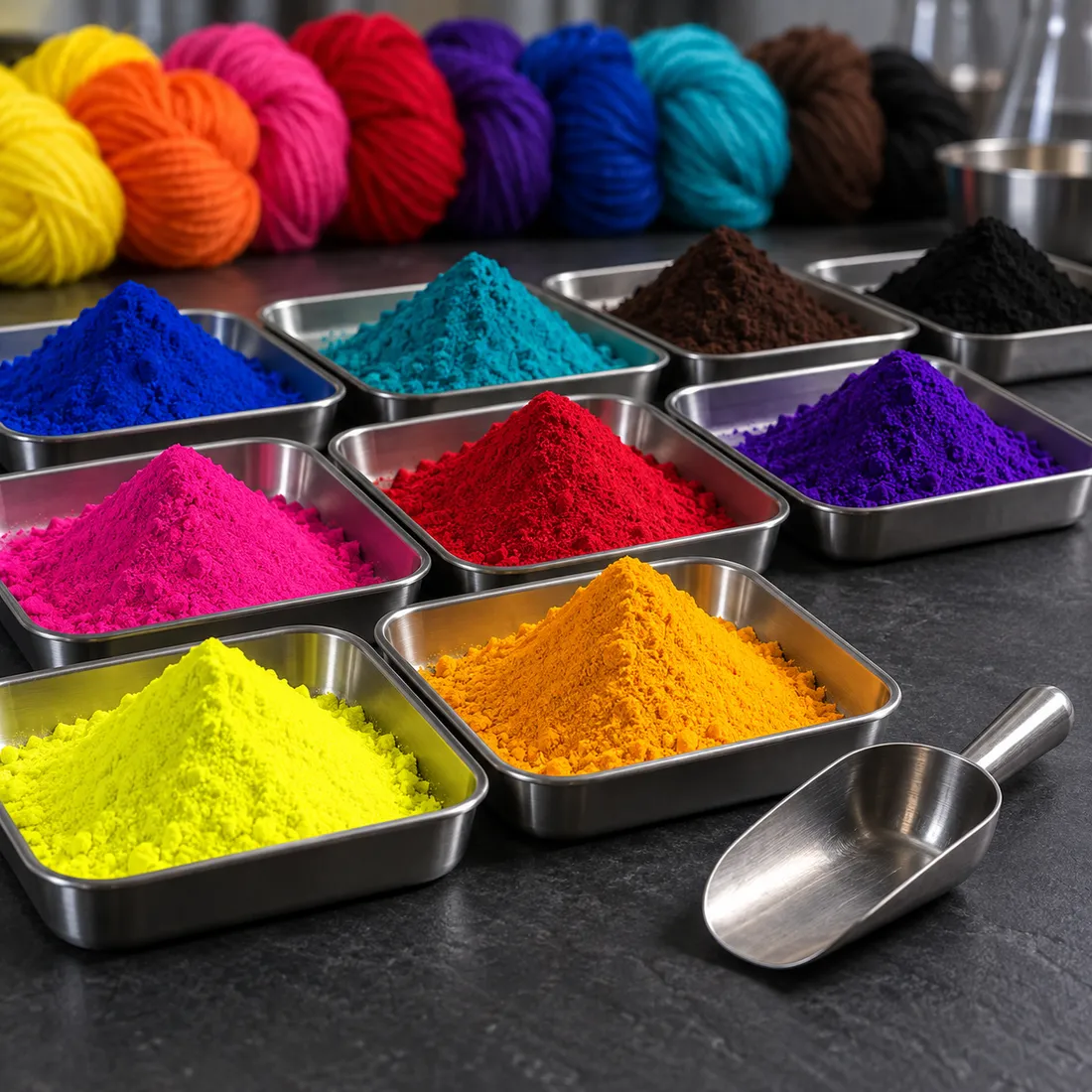
Ten yellows from Fl. Yellow X-10GFF to Yellow 2RL, plus Golden Yellow X-GL and Orange G. Light fastness mostly 6 to 7-8, an SD variant of each shade extends the range.

Textile Chemistry · Cationic Dyes
Dragonacrylic dyes bond ionically to the acid groups in acrylic fibre. One shade card from Fl. Yellow X-10GFF to Black O, each shade with its C.I. Basic number, K value, F value and fastness data.
Product detail
The Dragonacrylic brochure lists every shade on acrylic fibre, with C.I. Basic number where it applies, dyeing depth in % owf, K value and F value for combination dyeing, fastness to light (xenon), washing at 60°C and rubbing dry and wet.
Fl. Yellow X-10GFF to Orange G
Ten yellows from Fl. Yellow X-10GFF to Yellow 2RL, plus Golden Yellow X-GL and Orange G. Light fastness mostly 6 to 7-8, an SD variant of each shade extends the range.
Brill. Red 5GN to Violet 3BL
Brill. Red 5GN, Pink FF and FG, Red 2GL, Red X-GRL, Red GTLN and GTL, Violet 5BLH and 3BL. Washing fastness mostly 4 to 5.
Blue M-RL to Black O
Blue M-RL, Brill. Blue RL, Turq. Blue X-GB, Navy Blue X-BRL, Dark Brown X-3RL and the three blacks X-RL, X-2RL and O, dyeing depth up to 3.0% owf.
Where it goes
Before you order
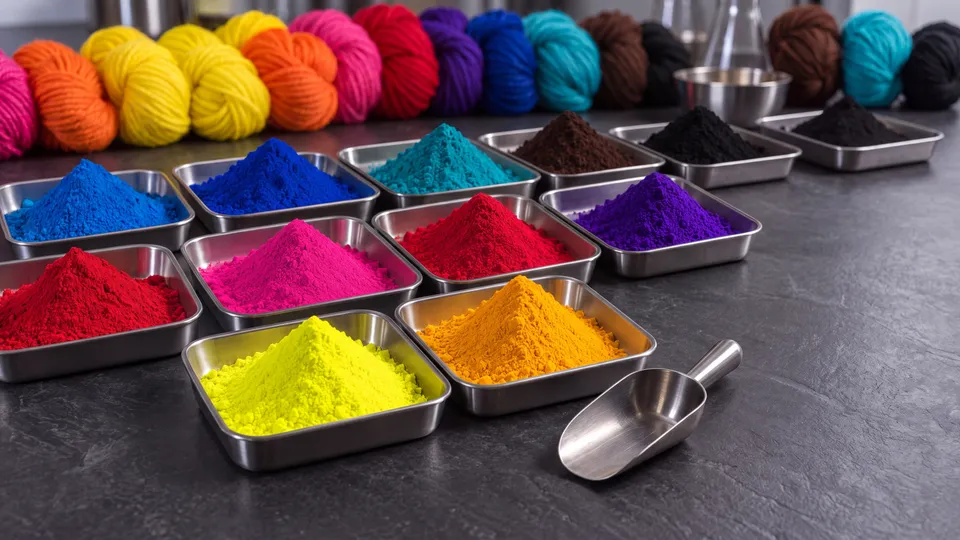
Water-soluble basic dyes that split into a coloured cation and bond ionically to the acid sites, sulfonate and carboxylate groups, in acrylic fibre. Dragonacrylic lists 54 shades from Fl. Yellow X-10GFF to Black O, each with its C.I. Basic number where it applies.
Dyeing acrylic fibre, yarn and knitwear: sweaters, blankets and outerwear in bright, saturated shades. Regular polyester needs a disperse dye instead; only cationic-dyeable polyester, a modified grade, takes a basic dye, so check the fibre before you order.
A cationic dye carries the colour on the cation and bonds to acid sites in fibres like acrylic. An anionic dye, such as an acid or a direct dye, carries the colour on the anion and bonds to basic sites in fibres like wool or cotton. Dragonacrylic covers the cationic side; Hongda's Dragonacid and Dragondirect ranges cover the anionic side.
The ionic bond to acrylic's acid sites forms fast and holds tight, so the dye exhausts before it can migrate and even out. That is what K value and F value manage: the brochure lists both per shade so you can combine dyes that exhaust at compatible rates and dye level.
The dye dissociates in water into a colourless anion and a coloured cation. The cation is drawn to the sulfonate and carboxylate groups in acrylic fibre and forms a strong ionic bond there, the reverse of how an acid dye bonds to wool. That strong bond gives cationic dyes their wash fastness and their tendency to dye unevenly without a matched K value and F value.
Strategic partners
Write directly to the partner team, or send the short application. It reaches Hongda's partner team by email.
info@hongda-chem.comOr call the group directly: +86 574 87907888