
What Types of Disperse Dyes Are There, and How Do You Tell E, SE and S Types Apart?
Disperse dyes are divided into three types, E, SE and S, by energy level. Type E dyes have small molecules, diffuse quickly and level well, but have low sublimation fastness; type S dyes have large molecules with many polar groups and high sublimation fastness, and most of their uptake happens at the high end of the temperature range; type SE sits between the two. To tell them apart, look at three tests: sublimation fastness, migration and the dyeing temperature curve. To choose among them, look at the dyeing method, the depth of shade and the finishing temperature.
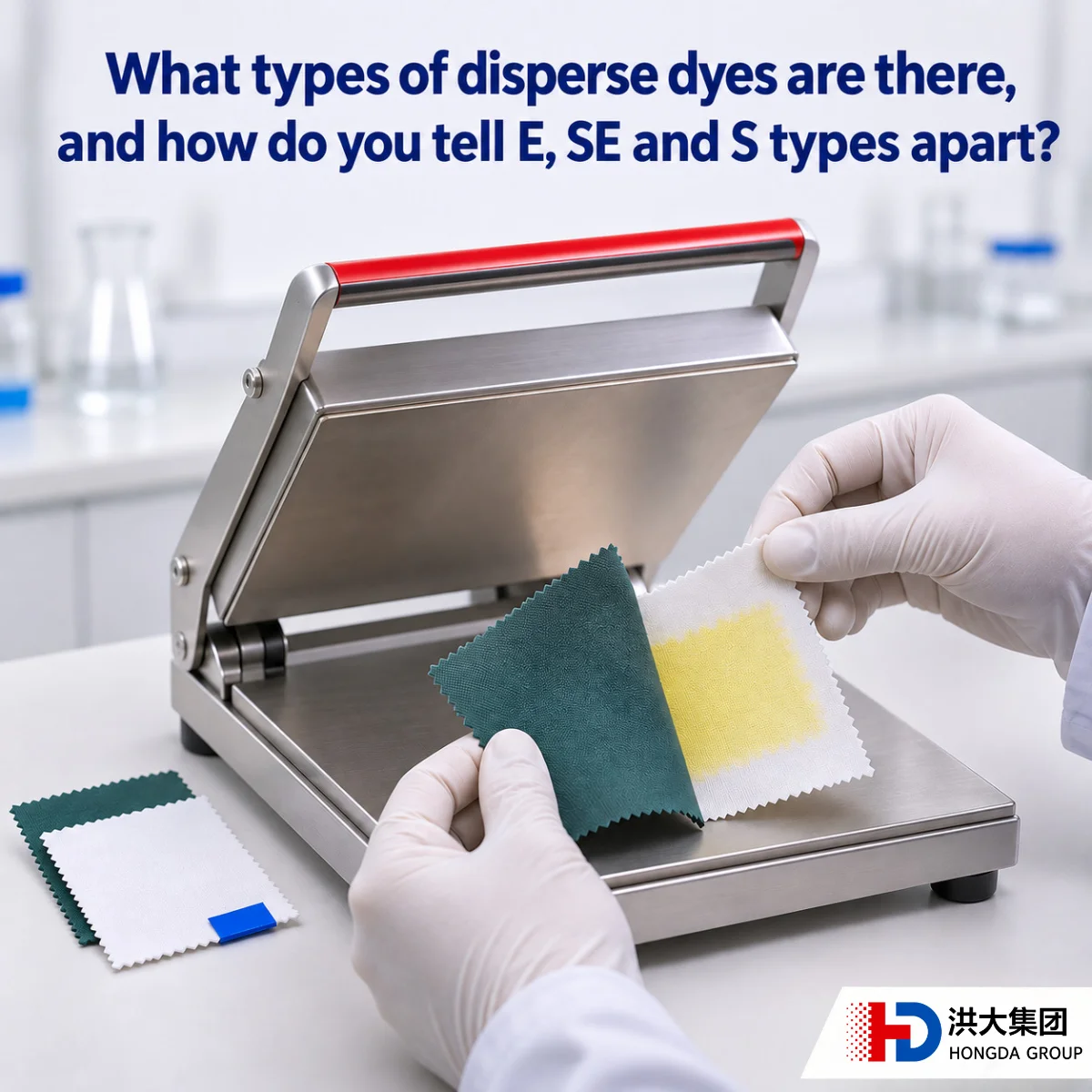
A dyehouse that specializes in outdoor fabrics took an order for polyester fabric for hardshell jackets in olive green, and after dyeing the fabric still had to go through high-temperature heat setting and coating. To keep costs down, the colorist built the olive green from a low-priced yellow and a deep blue with good sublimation fastness, and the lab dip matched on the first try. When the bulk came out of the machine, the head and tail of the same lot differed in depth of shade, and the shade did not match from one batch to the next either. The bigger problem appeared after heat setting: the yellow component left the fiber at high temperature, the whole fabric turned bluish, the guide rollers of the stenter picked up a yellow film, and the next batch of white fabric was stained. When the coating plant received the fabric, it also found that the back of the coating had yellowed. The whole lot was downgraded, and the dyehouse paid for the coating plant's rework on top of that. The investigation afterwards showed that the yellow was a low-energy type E dye and the deep blue a high-energy type S dye. The two dyes were a full class apart in dyeing behavior and heat resistance, and the outcome of the order was settled the moment they went into the same recipe.
What Types of Disperse Dyes Are There, and How Do You Tell E, SE and S Types Apart? Disperse dyes are divided into three types, E, SE and S, by energy level. Type E dyes have small molecules, diffuse quickly and level well, but have low sublimation fastness; type S dyes have large molecules with many polar groups and high sublimation fastness, and most of their uptake happens at the high end of the temperature range; type SE sits between the two. To tell them apart, look at three tests: sublimation fastness, migration and the dyeing temperature curve. To choose among them, look at the dyeing method, the depth of shade and the finishing temperature.
The dividing line between the three types lies in molecular size and heat resistance. By chemical structure, disperse dyes can be grouped into azo, anthraquinone and heterocyclic dyes, but in production, dyehouses more often classify them by application properties into types E, SE and S, which in China are also called low-temperature, medium-temperature and high-temperature types. The classification reflects the “energy” of the dye molecule: dyes with a low molecular weight and few polar groups are low-energy, and dyes with a high molecular weight and many polar groups are high-energy. Energy level decides two things at once: how fast the dye diffuses inside the fiber, and how easily it sublimes back out of the fiber at high temperature. The two properties pull in opposite directions, and no single dye can diffuse fastest and resist sublimation best at the same time; that is why the classification matters. Type E: early uptake and good leveling, but sensitive to high finishing temperatures. Type E dyes are low-energy dyes with small molecules. They start dyeing at fairly low temperatures, diffuse quickly and migrate well, so they give even shades and cover minor variations in the fiber itself fairly well. Their weak point is heat resistance: their sublimation fastness and thermal migration fastness are low, and once the fabric goes through high-temperature heat setting, pressing or thermosol fixation, the dye comes back out of the fiber and causes shade changes and staining. Type E suits atmospheric boil dyeing, carrier dyeing and light to medium shades that call for excellent leveling, as well as blends of polyester with fibers that cannot stand high temperatures. Type S: resistant to sublimation, suited to thermosol and dark shades, with strict temperature control. Type S dyes are high-energy dyes with large molecules and many polar groups. They only start dyeing noticeably at higher temperatures, diffuse slowly and migrate poorly. Their strength is resistance to sublimation and thermal migration, which makes them suitable for continuous thermosol dyeing, for fabrics that need high-temperature heat setting, and for products that are later coated, laminated or pressed. Most of the uptake of type S dyes happens in a narrow band at the high end of the temperature range, so even a small deviation in heating control causes uneven dyeing and batch-to-batch shade differences, and once a dyeing comes out uneven, there is little room to correct it through migration. Type SE: a balance between leveling and fastness. Type SE dyes are medium-energy dyes, with diffusion and sublimation fastness both at an intermediate level. They are the most versatile type in high-temperature, high-pressure exhaust dyeing and are often used for medium to dark shades and for large orders with fastness requirements. Many dyehouses build their everyday shades mainly on type SE, because its tolerance of process fluctuations and the heat resistance of the finished fabric are both good enough. Keep in mind that each manufacturer draws the line between types by its own standard, and dyes labeled SE lean in different directions, some closer to type E and some closer to type S, so base your choice on test data.
With the wrong type, problems pile up at two stages: combination shades and finishing. Mixing types in one recipe throws the dyeing rhythm out of step. In a combination shade, the dyes have to go on together over the same heating cycle for the color to stay consistent from start to finish. Type E dyes take up heavily at fairly low temperatures, while type S dyes only catch up in the high-temperature range. When the two are combined, the fabric first takes on the color of the type E dye early in the heating cycle and only picks up the type S color later, so the shade keeps shifting throughout the process. Temperature and liquor flow vary from place to place in the machine, so the shade shifts at a different pace in different places, and the result is uneven dyeing, head-to-tail shade differences and batch-to-batch differences. Even if one batch comes out level, slightly different heating conditions in the next batch shift the shade again, and reproducibility is poor. That was the first problem the dyehouse in the opening story ran into. Finishing temperatures exceed what the dye can withstand. After dyeing, polyester fabric goes through heat setting, and many fabrics are also pressed, coated or laminated, all under dry heat. Dyes with low sublimation fastness leave the fiber at these finishing temperatures, with three consequences: the fabric itself changes shade, adjacent fabric or lining gets stained, and the guide rollers and ovens of the equipment become contaminated and in turn stain the next batch. If even one dye in a combination recipe lacks heat resistance, the whole color shifts during finishing; the olive green in the opening story turned blue because the yellow component was lost to sublimation. Thermal migration is harder to spot. During storage and use, the dye slowly migrates toward the coating or the fiber surface, so the color passes inspection on delivery and staining complaints only arrive months later.
Three tests show which type a dye belongs to. The type stated on the shade card and in the technical data can serve as a first screen. Manufacturers classify types by different standards, and the same shade from different sources can perform very differently, so the most reliable approach is to check every new dye with the following three tests when it arrives. Sublimation fastness test. Place the dyed swatch against a white fabric, treat them with dry heat at a set temperature for a specified time, and grade the result with the color fastness to dry heat method in the International Organization for Standardization (ISO) 105 series. Dyes with high grades are type S or SE leaning toward S, and dyes with low grades are type E. Set the test temperature to the actual heat-setting temperature in your finishing, and the test will also tell you whether this dye can be used on your fabric. Migration test. Put a dyed swatch and a white fabric of the same weight into a blank dyebath with no dye, hold it at the dyeing temperature for a while, and see how deeply the white fabric is dyed. The deeper the white fabric is dyed, the better the dye migrates and the closer it is to type E; if the white fabric picks up only a light stain, the dye is type S. Dyeing temperature curve test. Heat as in bulk production, take swatches or measure the residual liquor concentration at different temperature points, and plot exhaustion against temperature. The curve of a type E dye starts rising at fairly low temperatures, the curve of a type S dye only climbs steeply in the high-temperature range, and type SE falls in between. This curve is also the most direct basis for picking dyes for a combination shade. Taken together, the three results tell you a dye's type and the processes it suits. The link between heating rate and leveling involves more process detail, so this article covers only the classification itself.
Choose the type by dyeing method, depth of shade and finishing temperature. Selection starts with three questions: what method you dye with, how deep the shade is, and how high a temperature the fabric will see in finishing. Here is the choice for four common situations. High-temperature, high-pressure exhaust dyeing: type SE is the most versatile; type E works for light shades and shades that call for excellent leveling, provided the finishing temperature stays within its tolerance; for dark shades and fabrics with high finishing temperatures, choose type S or SE leaning toward S. Continuous thermosol dyeing: the fabric is fixed briefly under intense dry heat, and type E dyes are largely lost to sublimation during curing, so choose types S and SE. Atmospheric boil dyeing, carrier dyeing, and blends of polyester with fibers that cannot withstand high temperatures, such as wool: the dyeing temperature cannot go high enough, so choose type E, since type S dyes cannot build deep shades under these conditions. Fabrics that need high-temperature heat setting, coating, laminating or pressing after dyeing: go by the highest finishing temperature and choose a type whose sublimation fastness meets the requirement; every dye in the combination recipe has to meet it. The dyes in one recipe should be of the same type, with close dyeing temperature curves. When you really do need to combine across types, make side-by-side lab dips first, then verify one batch under bulk heating conditions, and scale up production only after the shade proves stable.
Can any dyes of the same type be combined? Being the same type is the starting point for a combination shade, but compatibility also depends on the specific shades. Two type SE dyes can still differ in their dyeing temperature curves and in how sensitive they are to temperature and to the acidity of the dyebath (pH). For a three-color recipe, choose dyes from the same series with similar dyeing curves, and confirm reproducibility at the lab dip stage under bulk conditions. The shade card does not state the type. How can you confirm it? First ask the supplier for the technical data of each shade and check the sublimation fastness and recommended process. If the data are incomplete, verify the type yourself with the three tests above: the sublimation fastness test is the quickest and can come first; for shades that will go into combination recipes, add the dyeing temperature curve. Our shade card states the type, fastness and suitable processes for every shade. If we only dye light shades and our finishing temperatures are not high, can we use type E throughout? Yes. Type E levels well, light shades come out even with it, and it dyes through at atmospheric pressure or at fairly low temperatures. Confirm two things: that heat-setting and ironing temperatures in finishing stay within the tolerance of type E, and that the garment will not meet high temperatures during manufacturing or use, such as heat-transfer labels and hot seam taping. If either condition is not met, switching to type SE is the safer choice.
Hongda Group has manufactured and exported textile chemicals and colorants in Ningbo since 1992, selling to more than thirty countries and working with more than five hundred distributors worldwide. Our disperse dyes come with a complete shade card covering types E, SE and S, with the fastness and suitable processes listed for every shade; every lot ships with a test report and a sealed standard sample. Tell us your dyeing method, target color and finishing temperature, and our textile dyes business unit will recommend combinations by type and arrange samples so you can verify them in your own process. To learn more about working with us, visit hongda-chem.com, click "Become a strategic partner" and contact us via WhatsApp or WeChat.