
A Visual Comparison of Pigment Red 170 and Pigment Red 254
Pigment Red 170 and Pigment Red 254 are common red organic pigments that differ in color matching. This comparison covers chemical class, shade, heat, light and weather resistance, migration and price, and what the chlorine in PR254 means for halogen-free requirements.
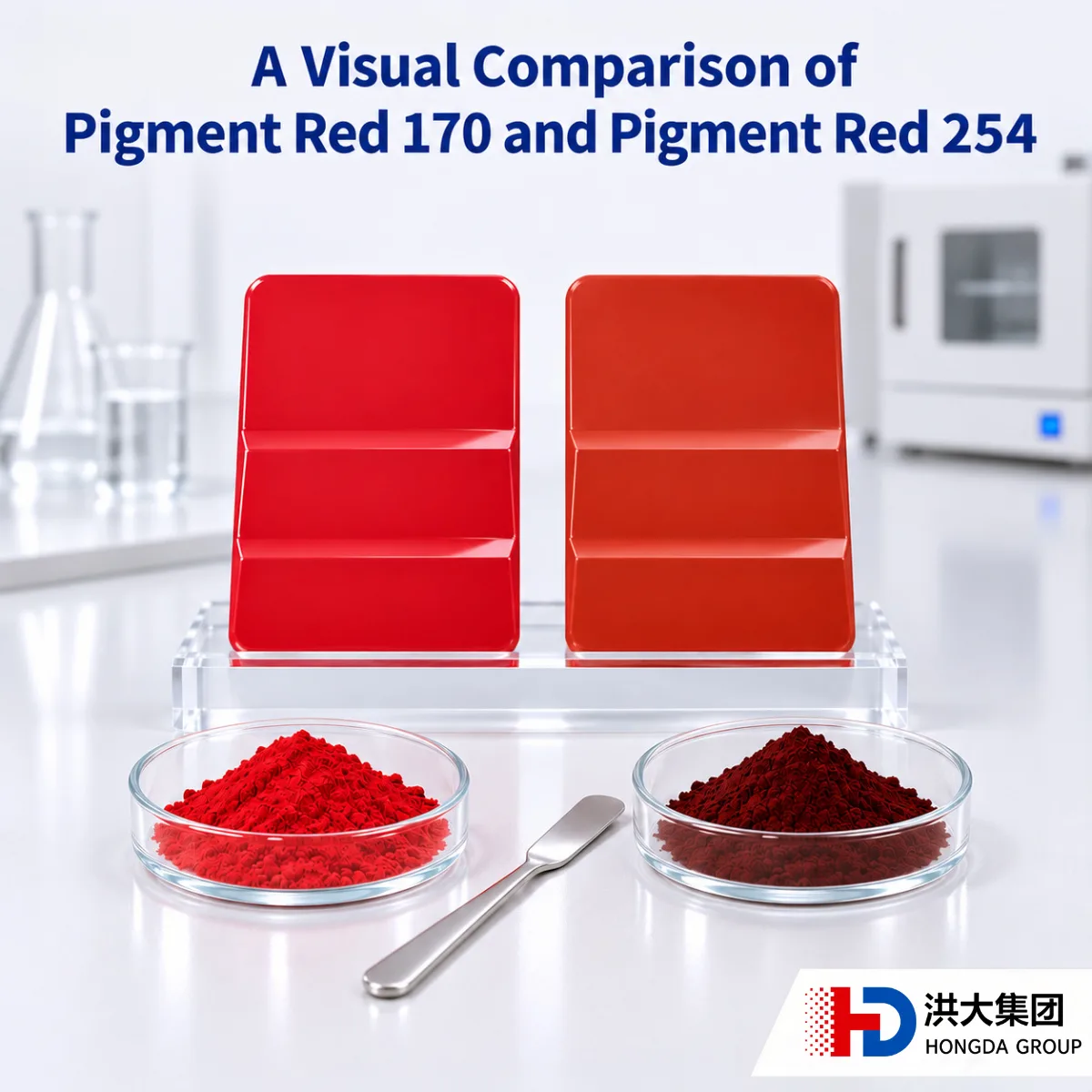
Most people who work in plastics, inks or coatings have come across Pigment Red 170 and Pigment Red 254. Both are common red organic pigments, but in actual color matching the two perform somewhat differently.
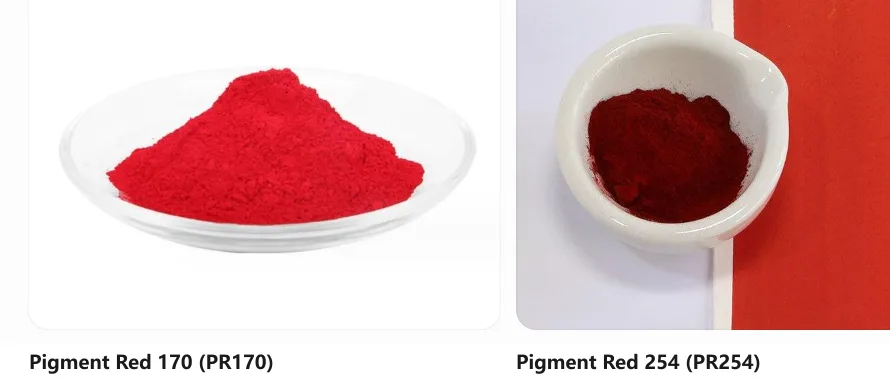
First, Pigment Red 170. It is an azo pigment with a wide range of applications and a relatively affordable price, used in all kinds of plastic products, inks and coatings. For products without high demands on weather or heat resistance, PR170 is often the more cost-effective choice.
Pigment Red 254 is different. It is a DPP pigment that usually offers better light, heat and weather resistance and a brighter color, which makes it suitable for products with higher demands on long-term performance. Its price, of course, is usually higher as well.
| Comparison item | PR170 | PR254 |
|---|---|---|
| Chemical class | Naphthol AS azo | DPP |
| Shade | Medium red, yellowish or bluish | Bright medium red, some grades bluish |
| Tinting strength | Relatively high | Relatively high |
| Heat resistance | Usually about 180–200℃ | Usually about 300℃ |
| Lightfastness | Generally level 6–7, depending on the grade | Usually level 7–8 |
| Weather resistance | Moderate to fairly good | Fairly good to excellent |
| Migration resistance | Depends on the specific grade | Usually good |
| Price positioning | Relatively economical | Relatively high |
Note: the above are reference ranges for common products. Manufacturer, crystal form, surface treatment and test conditions all affect the actual values.
Another point that is easy to overlook: the molecular structure of Pigment Red 254 contains chlorine. Its molecular formula is C18H10Cl2N2O2, meaning each molecule contains two chlorine atoms.
This does not make it a heavy-metal pigment, nor can it simply be assumed that containing chlorine makes it harmful. But if the product is for export, or is used in fields with requirements on halogen content, such as electronics and electrical appliances, cables or specialty plastics, the customer's standard needs to be confirmed in advance. Especially for products that explicitly require being halogen-free, it is not enough to look at the pigment's color and heat resistance: you also need to ask the supplier for related test data such as total chlorine and total bromine. A RoHS report cannot directly replace a halogen-free test report.
In actual material selection, the question should not simply be which of Pigment Red 170 and 254 is better. Ordinary applications may focus more on price and coloring effect, while outdoor products, products processed at high temperatures, or export products with special environmental requirements need to weigh weather resistance, heat resistance and halogen requirements together.
In addition, products with the same pigment number from different manufacturers may also differ in crystal form, surface treatment and specific performance. Before actually putting a pigment on the production line, it is best to take samples and run real tests, rather than deciding on the grade name alone.