
Why Does the Same Dye Lot Produce Different Shades Between Dyeing Batches?
When one dye lot comes out a different shade from batch to batch, the cause is usually not the dye itself but the process variables that shift on every run: the temperature curve, the water, and the liquor ratio.
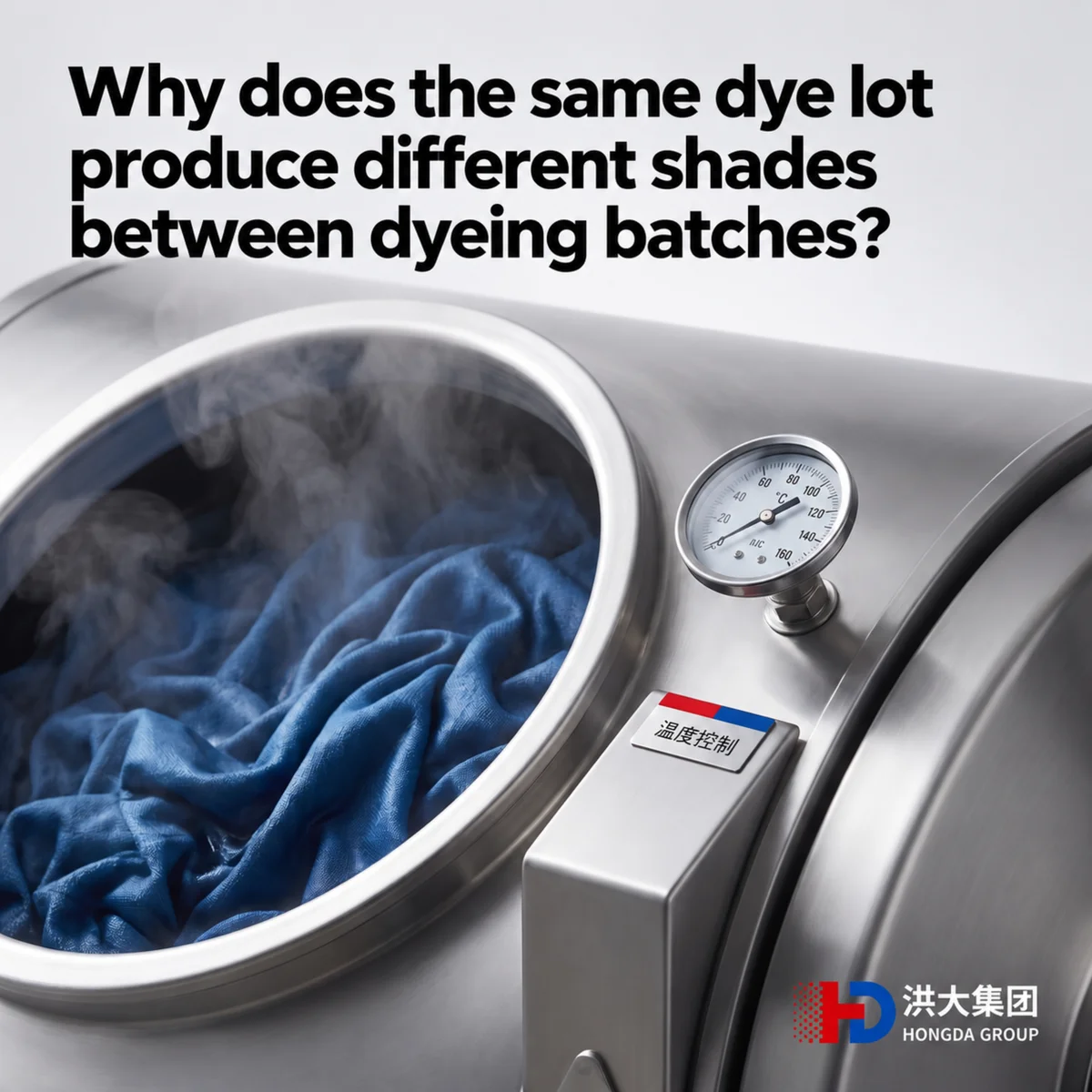
The floor supervisor frowned at the two rolls that had just come off the line. Same supplier, same dye lot number, same dyeing machine, and yet the two batches of fabric differed in color enough to see at a glance. The customer's acceptance standard was strict, and a deviation outside tolerance meant reworking the whole order, with the risk of a return on top of it. He went over the dye test report again and again, confirmed the composition was identical, and still could not find where the problem started.
Why does the same dye lot produce different shades between dyeing batches? Shade variation usually traces back to the process variables of the dyeing run itself. Even small swings in temperature, time, water quality or liquor ratio change the way dye molecules bond to the fiber, and the eye reads that change as a color difference. The composition of the dye stays stable; what really decides the final shade is how tightly the process is controlled on each individual run.
Every dye has an optimum exhaustion temperature range. Inside that range, the dye molecules migrate gradually into the fiber and form a stable, durable bond. Let the dyebath run a few degrees above the standard value and exhaustion accelerates noticeably, dye piles up on the fiber surface, and the result is a shade that reads too deep or unevenly colored in places. Run the bath too cool and the molecules never penetrate fully, the fiber picks up less dye overall, and the shade comes out light. Small errors in the temperature control equipment, differences in heating rate, seasonal swings in the workshop ambient temperature: stack those together and two runs made with the same dye lot number can end up visibly apart.
Exhaustion does not happen the instant the bath reaches its set point. It develops along a full heating curve. Raise the temperature too quickly and a large share of the dye adsorbs onto the fiber surface early, with no time to diffuse evenly into the interior, which leaves a dyed layer that is deep outside and pale inside. Raise it too slowly and the molecules linger too long in the low temperature stage, which amplifies any difference in the order in which batches of fabric meet the liquor. Controlling the slope of the heating curve, not just the final temperature, is the step that keeps shade consistent from batch to batch.
The efficiency of the bond between dye molecule and fiber changes noticeably with the pH of the bath. The same dye does not present exactly the same hue in a slightly acidic bath as it does in a neutral or slightly alkaline one. If the process water comes from different sources, or if the softening treatment varies in effectiveness from batch to batch, the actual pH of the dyebath moves with it. Even when the dye is weighed strictly to formula at charging, a change in water conditions alone can shift the saturation and the light-to-dark depth of the finished cloth.
The concentration of calcium and magnesium ions in the water is a major variable behind dyeing consistency. In harder water, those ions readily form complexes with dye molecules, altering the color the dye actually develops on the fiber surface and lowering its solubility, which leaves fine precipitate in the bath. Once that precipitate settles on the fiber it produces specks or a haze too faint to catch by eye, and over time it shows up as a whole batch of cloth reading gray or dull. Treating process water with consistent softening and testing hardness on a schedule cuts the risk from this kind of variation substantially.
Liquor ratio is the relationship between the total volume of dye liquor and the weight of the fabric, and once that ratio drifts from standard, the density at which dye distributes among the fibers drifts with it. A dyeing machine running at full load moves and contacts the fabric quite differently from one running half loaded. As equipment ages, circulation pump output falls off as well, which makes the distribution of liquor still less even.
When the liquor ratio runs high, the working concentration of dye in the bath is diluted, the fabric picks up less dye overall, and the shade trends light. When it runs low, dye concentration in the bath is relatively concentrated, some areas of the fabric can take up more than they should, and the shade trends deep with a tendency toward unevenness. The weight of fabric loaded varies slightly on every run, and the real flow rate of the circulation system changes as the equipment accumulates hours. Together those factors determine how stable the liquor ratio is, and with it whether shade holds from one batch to the next. When we assess a shade variation problem, we usually check the liquor ratio records first, because that figure is the easiest one to overlook and it has a marked effect on the final color.
When a dye test report passes cleanly and the dyeing result is still inconsistent, it is because the report reflects whether the composition and strength of the dye meet standard, not the actual state of the process variables during dyeing: temperature, pH and liquor ratio. We recommend logging the process parameters of every batch alongside the dye quality check, since that is the only way to locate the real source of the variation. Changing the dyeing machine does not solve the problem on its own either, because temperature control accuracy, pump flow and heating uniformity all have to be recalibrated and verified; after a machine change we normally suggest running at least three sample dyeings and confirming that the parameters hold steady before going into production. Water softening does reduce the interference of calcium and magnesium ions considerably, but seasonal variation in the water source itself can still introduce small fluctuations, so we recommend building water testing into the daily production routine and checking hardness and pH on a regular schedule, keeping the risk inside a range the process can anticipate.