
Building the Backbone
By 1995, Hongda had established an innovative edge in the finished dyestuff sector. Yet we were keenly aware of one fundamental truth: the competitiveness of the entire industry ultimately rests on intermediates. Without high-quality raw materials and basic chemical feedstocks, even the finest dyes cannot reliably meet market demand.
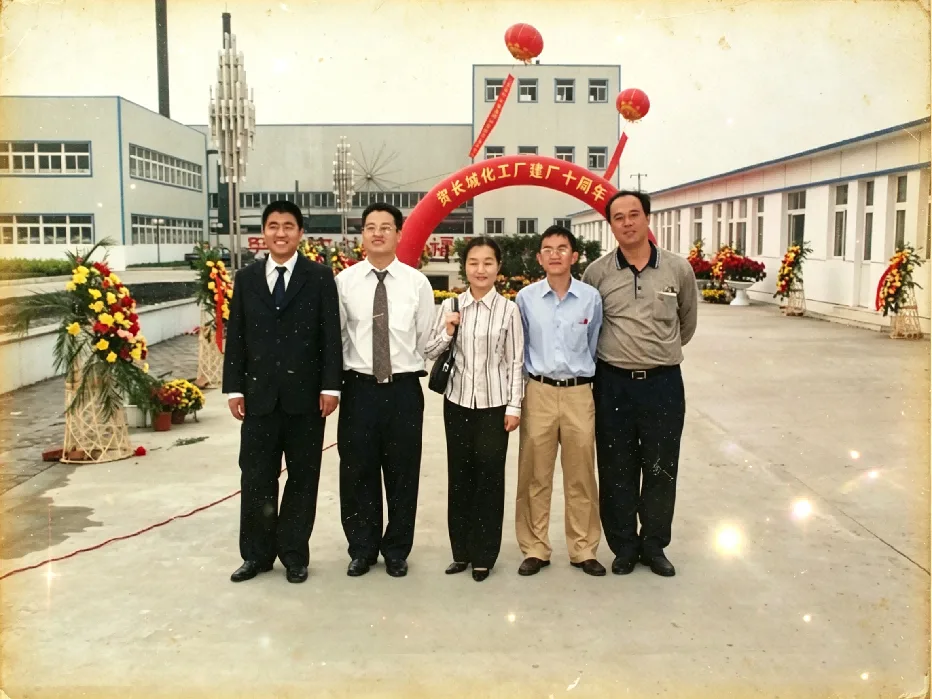
Based on this judgment, we took a strategic step: joining hands with Tianjin Greatwall Chemical Plant to jointly develop naphthol-series intermediates for reactive dye production. This was a deep technical undertaking, carried out mainly in laboratories and reaction vessels, far from public view, yet directly tied to strengthening the industry's foundational capabilities.
Through sustained investment and technical accumulation, we became one of the largest exporters of beta naphthol, Tobias acid, and related intermediates. These components are unassuming, yet they are the key elements behind brilliant colors; without them, the entire dyeing industry would struggle to function.
While steadily advancing our intermediate export business, we further extended our supply chain footprint. On one hand, we continued to export intermediates overseas; on the other, we introduced MANGMANI's double reactive dyes from India and became the general distributor of MANGMANI reactive dyes in China. This was not merely a trade-level cooperation, but also an opportunity for technology introduction and industrial upgrading. As cooperation deepened and technology was absorbed, we gradually moved from distribution to independent production, ultimately bringing double reactive dyes to China and achieving localized production.
From exporting intermediates, to importing double reactive dyes, to localized manufacturing, we completed a full supply chain leap. This leap not only enhanced Hongda's own supply chain control, but also advanced the localization of double reactive dyes in China, filled an industrial gap in the domestic sector, and made a contribution of industry-wide significance: helping China's dyestuff industry break its long-term dependence on imported double reactive dyes and achieve independent control over key links.
This practice also gave us a profound understanding of the value of vertical integration: by controlling a longer supply chain, we ensure product quality, optimize cost management, and respond more quickly to customer needs. This experience continues to pay dividends decades later.
This work is not glamorous, but it is foundational, and that is precisely where its importance lies.