
Hongda Launches a New Range of Dyes
About HA-type reactive dyes:
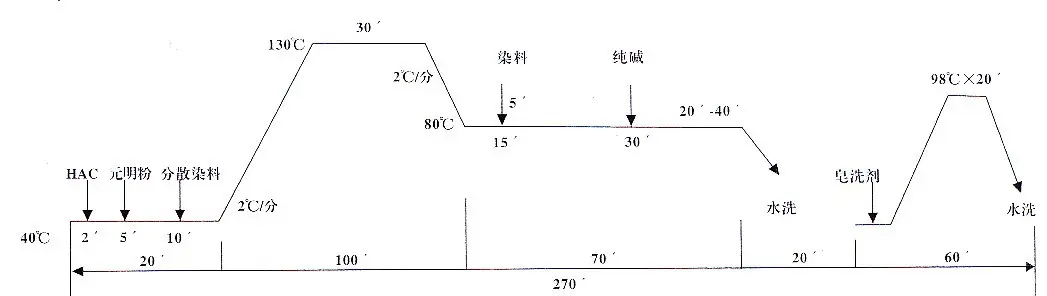
1. HA-type reactive dyes are a newly developed high-temperature, low-alkali dye range containing two or more reactive groups. Their high reactivity allows a complete bonding reaction with the fiber under mildly alkaline conditions.
2. Dyeing under low-alkali conditions keeps dye hydrolysis to a minimum, improving fixation rates and dye utilization. This addresses long-standing issues with conventional reactive dyes such as wastewater treatment and high soda ash consumption, while improving fastness across the board.
3. Dyeing under low-alkali conditions also lowers the exhaustion rate, which reduces uneven dyeing.
1. HA dyes can be applied together with disperse dyes in a one-bath two-step process on T/R, T/C and CVC polyester-cotton blends, with fastness results identical to the two-bath two-step process used with conventional dyes (soda ash consumption increases by roughly 2 g/L compared with dyeing pure cotton).
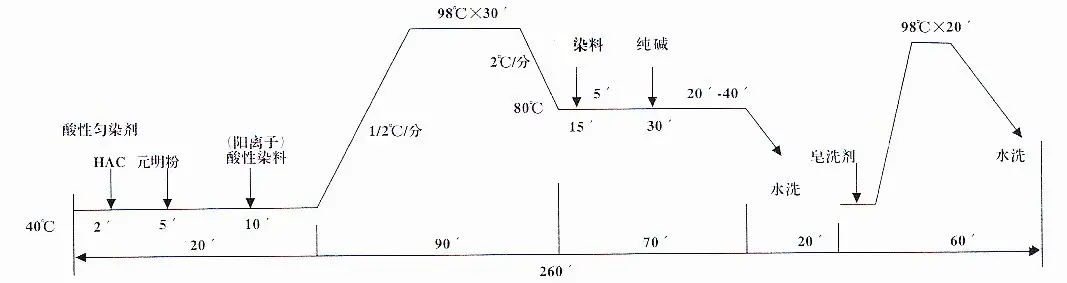
2. HA dyes can be applied together with acid dyes (or cationic dyes) in a one-bath two-step process on N/R.C and A/R.C nylon-cotton and acrylic-cotton blends (soda ash consumption increases by roughly 2 g/L compared with dyeing pure cotton).
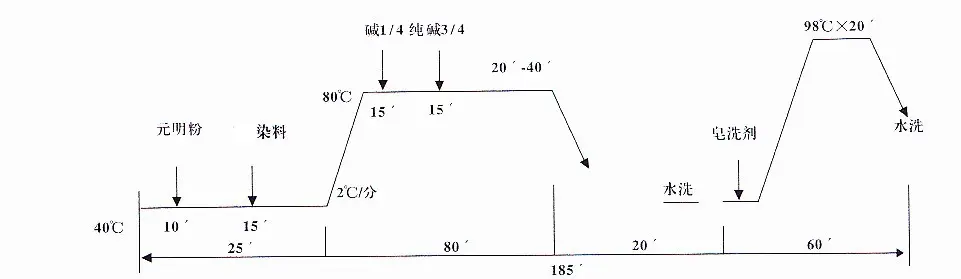
3. HA dyes are also suitable for pure cotton and viscose dyeing processes.
Advantages:
1. Soda ash consumption is 80% to 90% lower than with conventional combinations, requiring only 1 to 3 g/L.
2. Excellent dyeing performance. A single process covers the full color range across the mill, cutting dyeing time by 2 to 5 hours. Higher productivity, lower cost, simple operation and an easy learning curve for operators.
3. Low-alkali fixation reduces water consumption. The entire dyeing process requires only 2 to 3 baths of water.
4. HA dyes are environmentally friendly, with COD roughly 50% lower than conventional dyes.
5. Low soda ash consumption means less fiber damage, lower dyeing losses and less risk of alkali spotting.
6. Excellent compatibility and dyeing stability ensure reproducibility and right-first-time results, with virtually no color specking.
Written by Xiang Xiaoming