
Digging In Amid Turbulence, Positioning Amid the Shake-Out: An In-Depth Visit to the Indonesian Market
As summer turned to autumn, from late August to early September, the company's team completed an in-depth visit to the Indonesian market. From Jakarta to Bandung, and from Central Java to Tangerang, the team held detailed talks with end customers, partners and official bodies on biocides, anti-mould, textile auxiliaries, pigments, coatings and inks, and HALAL certification. It was a journey that set out with questions and came back with judgments. The Indonesian market is a tough one, but the opportunities have not disappeared: they are simply showing up in a different form.
Indonesia: the old order is leaving the stage, new opportunities are growing in the gaps
The current environment in Indonesia is not an easy one. Political volatility, governance challenges and corruption intertwine, and the business climate has grown more complex. Since the wave of closures of large textile companies in 2023, export trade has been under sustained pressure. Some international fast-fashion brands have shifted orders to Bangladesh, Egypt and other countries, while Indonesia's textile industry, made up of small players with dated technology and a heavy dependence on imported cotton, has gradually fallen behind in the fierce competition. On the policy side, non-essential social spending is crowding out funds for infrastructure development, which also drags on demand for construction and coatings chemicals.
But the visit also showed us the other side. In the late stage of a mature market, old large companies are being cleared out naturally as profits fall and capital withdraws, while the next large companies are gradually being incubated among the lean small and medium-sized firms rooted in the local market. We need to seize this moment and grow together with local companies that have potential: that is how to take root in the market and wait for the situation to change.
Biocides and anti-mould: from selling products to selling solutions and services
Biocides and anti-mould were a key focus of the trip. The team visited a number of companies in coatings, inks, emulsions and biocides, and found that mould in the humid climate is a universal pain point. Customer demand for formaldehyde-free and zero-VOC products, in-can preservation, and interior and exterior wall anti-mould is real. But selling raw materials alone is no longer enough: customers put more weight on formulation support, quality testing, biological challenge tests and long-term service capability.
At one company in Jakarta, the team saw the real demand for anti-mould and biocide solutions. The customer cares about raw material prices, but even more about formulation stability, testing capability and continuous service. Starting from sample testing, the two sides are now discussing a local agency and joint service model. Companies like this are not necessarily the largest, but they decide quickly and are deeply rooted locally: exactly the partners we are looking for. Going forward, the team will keep pushing the "product + formulation + service + agency" cooperation path, tying our technical capability to local channels.
HALAL and Japanese companies: behind the threshold lies an entry ticket
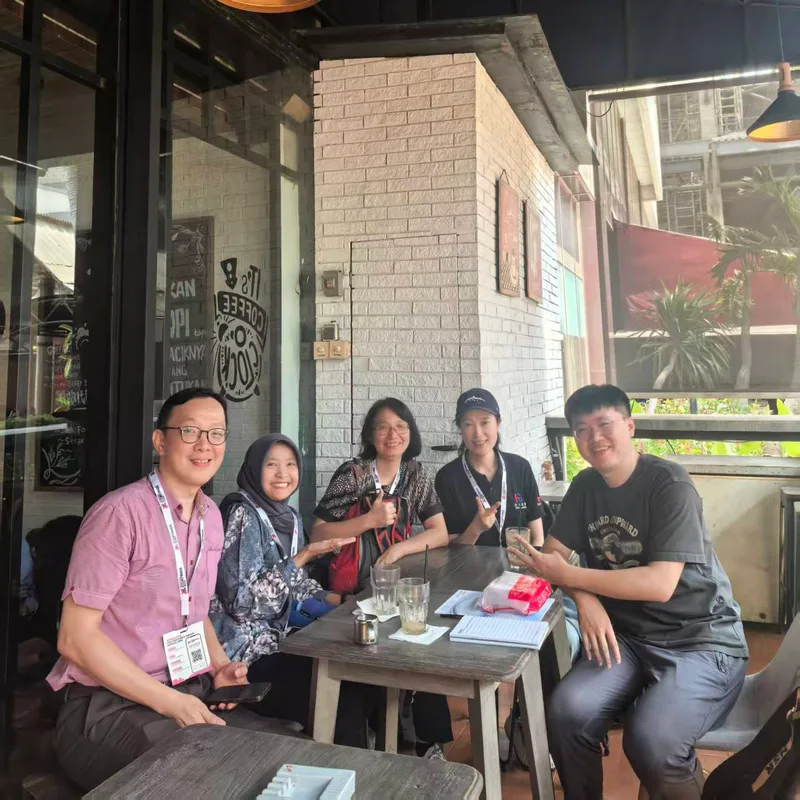
HALAL was a policy question this trip had to clear up. The team visited Indonesia's HALAL certification body and mapped out the certification process, labeling requirements and supply chain implications. The key judgment: the market as a whole can still work with declarations, but under the requirements of the Indonesian Ulema Council (MUI), large companies serving Muslim consumers prefer to comply with HALAL regulations and apply hard requirements to raw material certification. In other words, HALAL is not mandatory for every customer, but it is the entry ticket to certain high-end supply chains.
On the Japanese channel, the team held in-depth talks with a Japanese-owned auxiliaries supplier. The company has a strong voice in the Indonesian market, holds firm HALAL requirements and connects with about 20 Japanese dyeing and printing companies in Indonesia. Through local Japanese channels like this, Hongda will enter the Japanese-owned supply chain directly and connect with large, high-quality customers.
Textile auxiliaries and colour pastes: raw materials compete on price, formulations compete on service
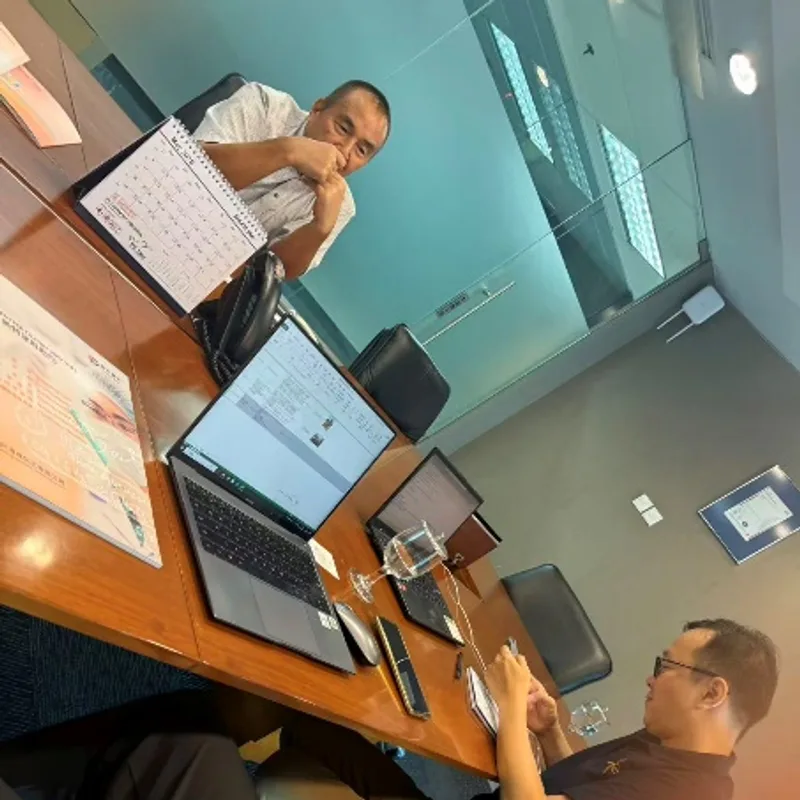
In Central Java and Bandung, the team visited a number of textile, printing, masterbatch and ink companies. The customer feedback was clear: price is not the only factor, and performance and service matter more. Thickeners must not change the hand feel of the fabric, dispersants need good flow and stable shade, and softeners and softener flakes need stable supply and local dilution support. Because order lead times are short, customers prefer to buy locally, which places higher demands on our local inventory, rapid response and dilution partnerships.
The team also explored with local partners a dilution and retail model for small and medium-sized customers: the company provides high-concentration formulations, technical training and quality control support, while the local partner provides people, equipment and premises, and sells the diluted product. This is both a sales model and a localized service network. At the same time, some international peers have already built local dilution and distribution capacity in Indonesia, and competition is moving upstream. We must get technical service, cost control and channel efficiency right all at once.
Risk control and channel expansion: putting credit and resources where they count
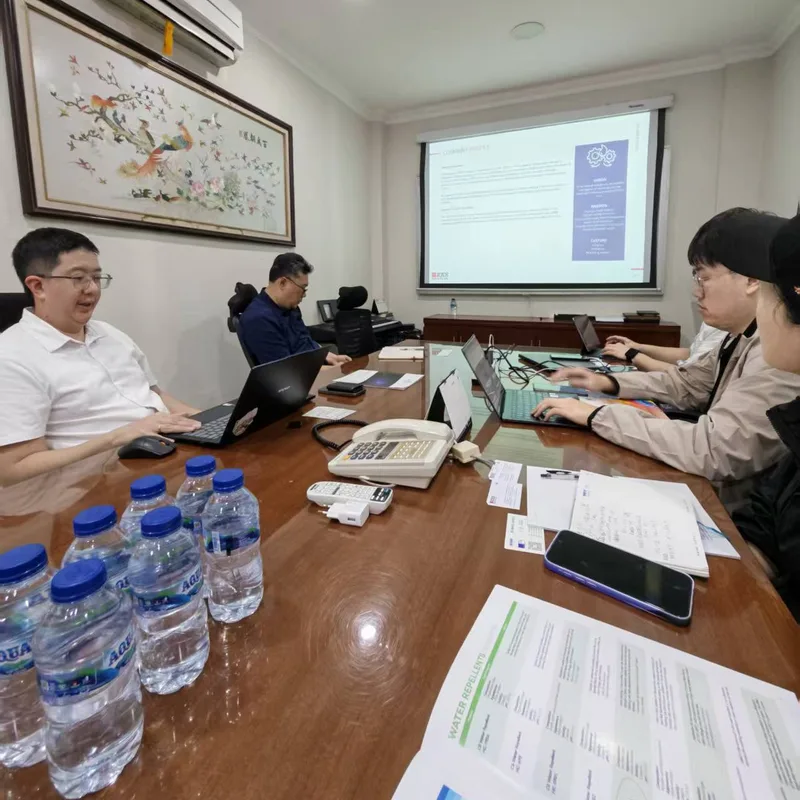
The trip also made it clearer that there can be no one-size-fits-all approach to Indonesia. With customers in financial difficulty or paying late, credit must be tightened and sales on credit avoided; development should prioritize relatively strong customers such as Tongkai and Toray; and high-risk areas should be avoided. Japanese-owned companies are relatively sound in both operations and payment, and can be considered a key direction for the next stage.
Conclusion: grow with companies that have potential, and wait for the situation to change
The Indonesian market faces major challenges today. Political turbulence, governance and corruption problems, weak exports and the shake-out in the textile industry all make short-term operations highly uncertain. But the visit also told us that the late stage of a mature market is often the incubation period for new forces. Old large companies that can no longer make money see capital flee and are cleared out naturally, while lean small and medium-sized firms rooted in the local market will gradually grow into the next generation of large companies.
Overseas markets are not a question of "whether there is opportunity" but of "how to seize it". In Indonesia, no single playbook will work everywhere. With flexible cooperation models, in-depth customer communication, solid technical service and strict credit management, we will hold on to local companies with potential and grow together with them. Only in this way can we take root in the market and wait for the situation to change.